The Strategic Pivot: From Cost-Play to a Growth Platform ($0 → Multi-Million ARR)
We'd reached our first $1M ARR selling a cost-efficient tool to small, emerging teams. It worked, and it had a ceiling. We'd optimised the product for exactly the segment that would never pay more. Leadership wanted to move up-market to larger, scaling teams where value per customer is meaningfully higher, without destabilising the base already depending on us. Changing the wheel on a running car.
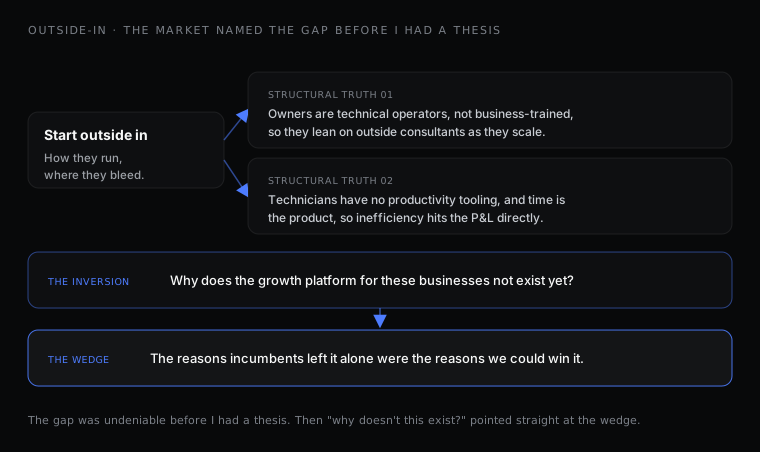
Outside-in first: the market told me the gap before I had a thesis. I started by studying the segment from the outside in: who these scaling service businesses are, how they actually run, where they bleed. Two structural truths surfaced. Their owners are technical operators, not business-trained ones, so as they grow they lean on outside consultants for the business mechanics. And their technicians had no real productivity tooling, because the legacy platforms were never built for it, and in this industry productivity hits the bottom line directly, because time is the product.
Only then the question: "why does this world not exist?" Once the need was visible, the sharper question was why no one had already built the growth-focused productivity platform for these businesses. Sitting with why it didn't exist pointed at the wedge: the structural reasons incumbents had left it alone were the same reasons we could win it.
Diagnosed three broken workflows, each tied to an outcome. Cost-of-goods tracking gave no accurate profitability. Decision analytics were retrospective when they needed to be real-time. The invoicing cycle leaked revenue on the way out. I mapped each to an opportunity tree, then test-iterate-validated every solution against a business outcome the new segment would pay for, before committing engineering to scale it.
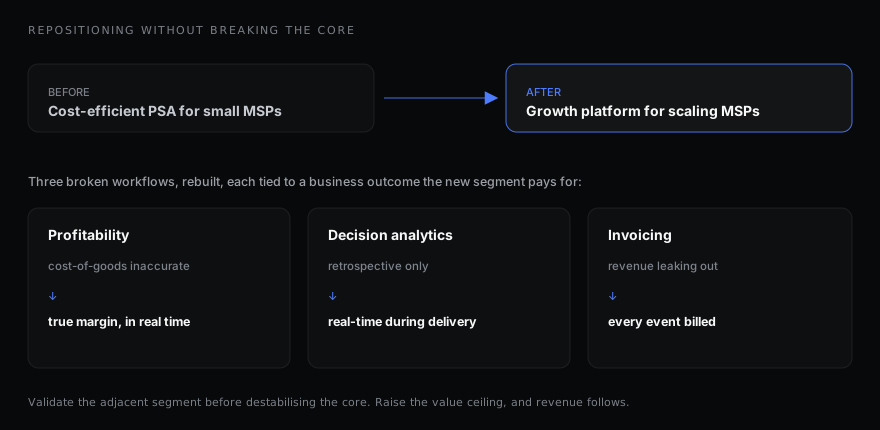
Protected the core while shifting the edge. Kept continuity for smaller customers and validated the adjacent segment before touching the base, because the sequencing was the strategy.
This was a strategy and sequencing job as much as a product one, driven with the dynamic strategy methodology I'd developed at Warwick: outside-in plus inside-out, a dynamic SWOT rooted in Brandenburger's HBR work, custom opportunity-sizing buckets, and a Now/Next/Later roadmap. We shipped a connected set rather than scattered features (profitability reports with accurate cost-of-goods, time-tracking innovations, contract management with a service-delivery map, and AI-driven sessions), each tied to a measurable outcome and sequenced so the foundation landed before what depended on it.
But a repositioning that only changes the product fails. I owned the GTM that carried it.
ICP, re-validated and codified. The target became growth-oriented MSPs of 3–25 technicians (sweet spot 5–15): big enough to feel growing pains, small enough that every efficiency gain counts. I defined the persona around their real questions: "Who are our best and worst customers? When should I hire another tech? Are we billing for all our work?"
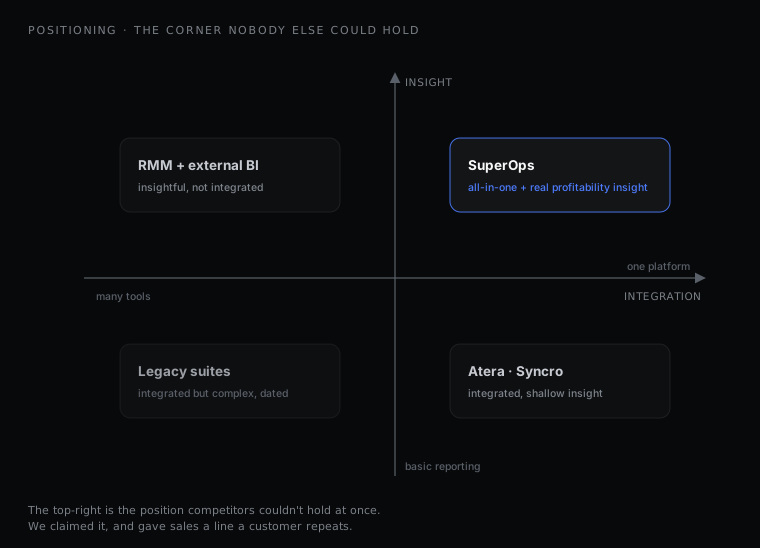
Positioning on two axes the competitors couldn't hold at once. Integration (one platform vs. many tools) and insight (basic reporting vs. strategic analytics). Incumbents cluster either integrated-but-shallow or insightful-only-if-you-bolt-on-a-BI-tool. We claimed the top-right: all-in-one and real-time profitability insight. "Run your whole MSP on one platform and get the metrics to grow it." Against RMM-first tools the line was unification; against legacy suites it was modern simplicity: "a fast yacht, not a battleship."
Value proposition in two sentences sales could carry. The efficiency platform for bottom-line improvement (do more with fewer techs, plug revenue leaks), and the insight platform for strategic growth (know which clients and services make money, and when to hire). The north-star was one MSP telling another: "We run SuperOps. We handle more clients with fewer techs, and it shuts down a ton of tickets automatically."
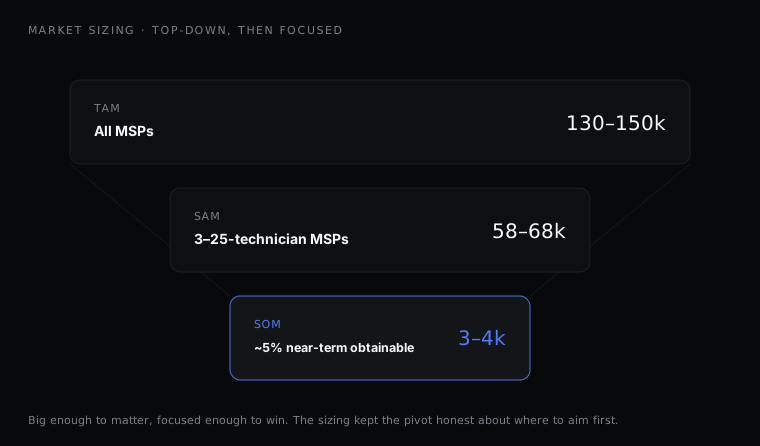
Market sized top-down and bottom-up. TAM ≈ 130–150k MSPs; SAM (the 3–25-tech band, after removing one-to-two-person shops and the enterprise tail) ≈ 58–68k MSPs; a near-term obtainable market at ~5% penetration ≈ 3–4k MSPs. The sizing kept the pivot honest: it told us the segment was big enough to matter and focused enough to win.
Recognised in the Canalys RMM & PSA Leadership Matrix: analyst validation that the repositioning landed in the market, not just the numbers.
Repositioning mid-flight is sequencing, not slogans; it's product and go-to-market or it's neither. Study the market outside-in until the gap is undeniable, validate the adjacent ICP before you destabilise the core, and arm sales with positioning sharp enough that a customer repeats it to another customer. The deepest lever: revenue per account rises when the value ceiling rises, not when the price does.
Chose the up-market bet by asking why the growth platform for scaling MSPs did not exist yet, then sequenced the pivot without breaking the core.
Read the thesis