Smart Tracker: A Real Innovation That Failed on Sequencing
Time tracking is where service businesses quietly lose money, and the pain was real and well-understood. Technicians ballpark their hours after the fact and under-report, so billable work leaks. Forcing a ticket to exist before you can start a timer adds friction at the worst moment. And managers only see time drain months later in a report, long after it has already cost the business.
These were the right problems, and I'd done the discovery to confirm them. So I led Smart Tracker to solve all three: track time from anywhere (in-app, a browser extension, a mobile widget) without creating a ticket first (a note will do), reconcile it to tickets later in an intuitive timesheet, and give managers real-time visibility into running timers so they can catch a technician stuck on an issue while it's happening and fix the inefficiency on the spot, not after the fact. That model was genuinely new in the category. It shipped, and it's a flagship part of the product today.
The bet was that this innovation would lift adoption and revenue per account in the larger-team segment. It didn't move the way I expected. Adoption of the new tracking lagged and revenue per account stayed flat. Rather than guess, I ran a structured root-cause analysis, in order, so each step ruled something out.
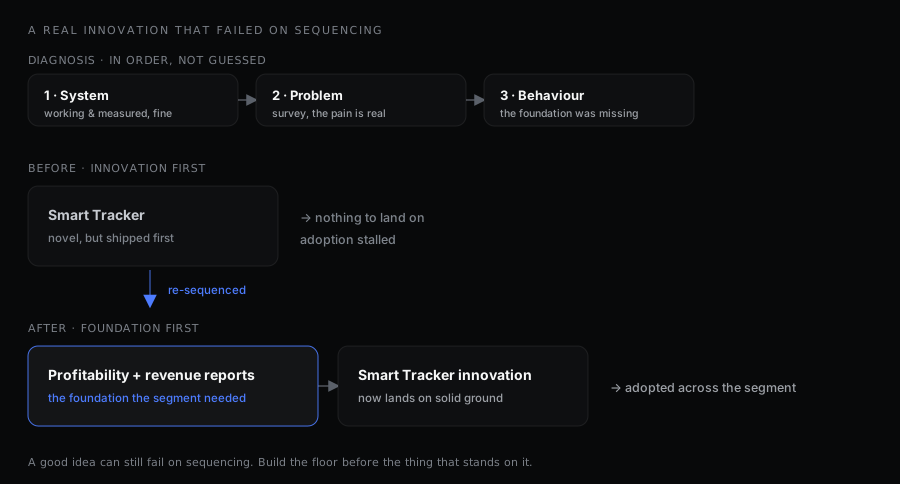
Validated the system. Was it working and measured correctly? Yes, only minor metric inconsistencies, which I corrected. Adoption didn't move.
Validated the problem. A market survey confirmed the pain was real and widespread, so the premise was sound; this was about uptake, not a fake problem.
Looked at real behaviour. Flow and Sankey analysis of how teams actually worked showed the issue wasn't the tracker itself. It was what hadn't shipped yet around it. For the larger MSPs I was targeting, the table-stakes foundation (accurate profitability and labour-revenue reporting) wasn't in place. I'd shipped an advanced, novel capability before the basics that segment expected, so it landed without the context that would make a team change its habits.
The fix was re-sequencing. I re-ordered the roadmap: shipped the profitability and labour-revenue reporting foundation first, then let Smart Tracker's innovations land on top of it, where ticket, contract, billing, and profitability context already made the tracked time mean something. On that foundation, adoption of time tracking and timesheets grew across the target segment. The ticketless model kept its place too, as the right pattern for a specific slice of users rather than the whole population: a clean, honest read of where the innovation fit.
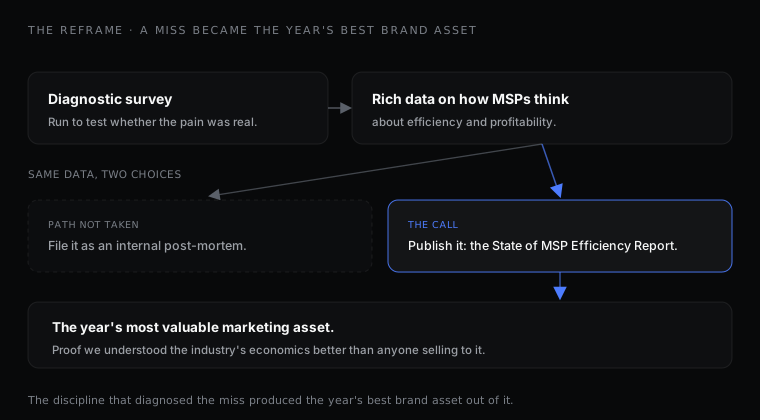
The second half is the part people don't expect. The diagnostic survey I'd run to test the premise had produced genuinely valuable data about how service businesses think about efficiency and profitability. Rather than file it as an internal post-mortem, I turned it into a published "State of MSP Efficiency Report": one of the year's most valuable marketing assets, and proof that we understood the industry's economics better than anyone selling to it.
A stalled rollout became a sharper roadmap and a flagship thought-leadership asset: the very survey that diagnosed the problem became the marketing centrepiece, and Smart Tracker is a live differentiator today. The discipline (diagnose in order, don't guess) became a reusable practice, and the reframe (sequence the foundation before the innovation) carried across the product org.
A genuinely good idea can still fail on sequencing. The problems were real and the innovation was right, but I shipped it ahead of the foundation the target segment needed first, so it had nothing to land on. The recovery wasn't quitting the feature; it was building the floor beneath it and letting the innovation stand on it. And running the diagnosis in order (system, then problem, then behaviour) instead of guessing didn't just save the roadmap; it produced the best brand asset of the year out of what looked like a miss.
When adoption stalled, diagnosed in order, then re-sequenced rather than quitting. The idea was right, the order was wrong.
Read the thesis