Investor-Facing Product Lead
I've been the product voice in the room across every round from Seed to Series C. Investors aren't buying features. They're buying a thesis, and evidence it's already coming true.
Most senior product people never get the investor-facing seat. I've had it since the early days, presenting product across every funding round from Seed through Series C. I demoed what we had built, walked investors through the metrics, and helped the founders shape the product story inside the pitch. It's the part of my background that surprises people, and it changed how I think about product more than almost anything else.
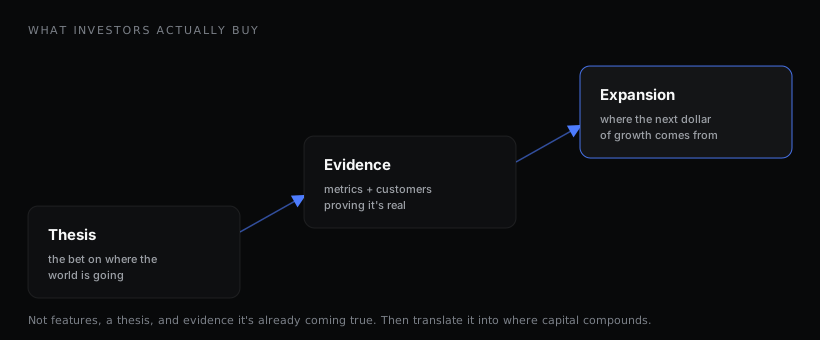
The first thing it taught me is that investors are not in the room for a feature tour. They're buying a thesis about where the world is going, and what they actually want from you is evidence that the thesis is already coming true. So a demo done well isn't "here's everything we shipped." It's "here is the one thing that proves the future we're describing is real, and here is the trace of customers behaving like it's real." Every demo I gave was built backwards from the argument it had to support, not forwards from the changelog.
The second thing is that your choice of metrics is a tell. Investors have seen a thousand vanity numbers, and the fastest way to lose the room is a chart that's technically up and to the right but doesn't mean anything. So I learned to lead with the numbers that map to the thesis and survive scrutiny. Adoption that proves the product is actually used, not just bought. Retention that proves the value holds. AI traction that proves the bet is landing. Revenue tied to the specific segment we said we would win, rather than a blended average that hides the truth. And the customer's own outcome, the profitability we put back in their pocket, because that is the real reason they stay. The honest number in context beats the flattering number every time, and people trust you more for showing the one that is still climbing.
The third thing is translation. Product people speak in features and flows. Investors speak in capital, compounding, and risk. The job in that room is to translate one into the other in real time. To connect a thing the team shipped to why it widens the moat, or locks in switching cost, or opens an expansion path. To turn a roadmap into a story about where the next dollar of growth comes from. I got good at standing in the gap between the product reality and the capital question, and telling the same truth in both languages.
None of this is a seat you get handed with a title. It's a seat you earn and then keep. I held it across rounds and across years because the founders trusted me to represent product honestly, the good and the unfinished, to people deciding whether to bet on us. That trust is the actual asset. The demos and the decks are just where it shows up.
The seat isn't only about the funding rounds, either. More recently I authored the board-level investment thesis for a new product line, the case for where we should place the next big bet. That meant turning a stack of outside-in market research and competitive intelligence into one defensible recommendation: who the buyer is, why now, where we genuinely have the right to win, and how we would take it to market. Then standing in front of the board to defend it, including the parts that were still uncertain. It's the same muscle as the fundraising room, just pointed forward instead of back. Making the case for where capital should go next, backed by evidence, told straight, with the open questions named rather than buried.
What I took from it is simple. The best product leaders can hold a board-grade conversation, not just a sprint review. They can stand in front of the people funding the company and make the product legible as a bet on the future, backed by evidence, told straight. Once you have had to do that, you build differently. You stop asking only "do users like this," and start asking "does this make our thesis more true."